// tower installs

Mesh nodes on towers

Height is the single biggest lever in this hobby. A node at 200 feet does more for the mesh than a dozen on windowsills — so RF Lab builds, hardens and installs nodes on real towers, and helps operators get their own hardware up there safely.

Why a tower changes everything

LoRa is line-of-sight-ish. Every foot of height buys horizon, and the horizon is what a mesh actually runs on. A ground-level node talks to its neighbourhood; a tower node talks to everyone’s neighbourhood at once and stitches separate pockets of the mesh into one network.

Tower sites also punish sloppy work. Up there a node sits beside commercial transmitters running hundreds of watts, in weather that finds every unsealed connector, somewhere nobody wants to climb twice. So a tower build isn’t a desk node on a taller pole — it’s a different standard of construction.

// the builds

Three builds we install

Matched to the site: what power is available, how high it goes, and what the mesh needs there.

Build 1

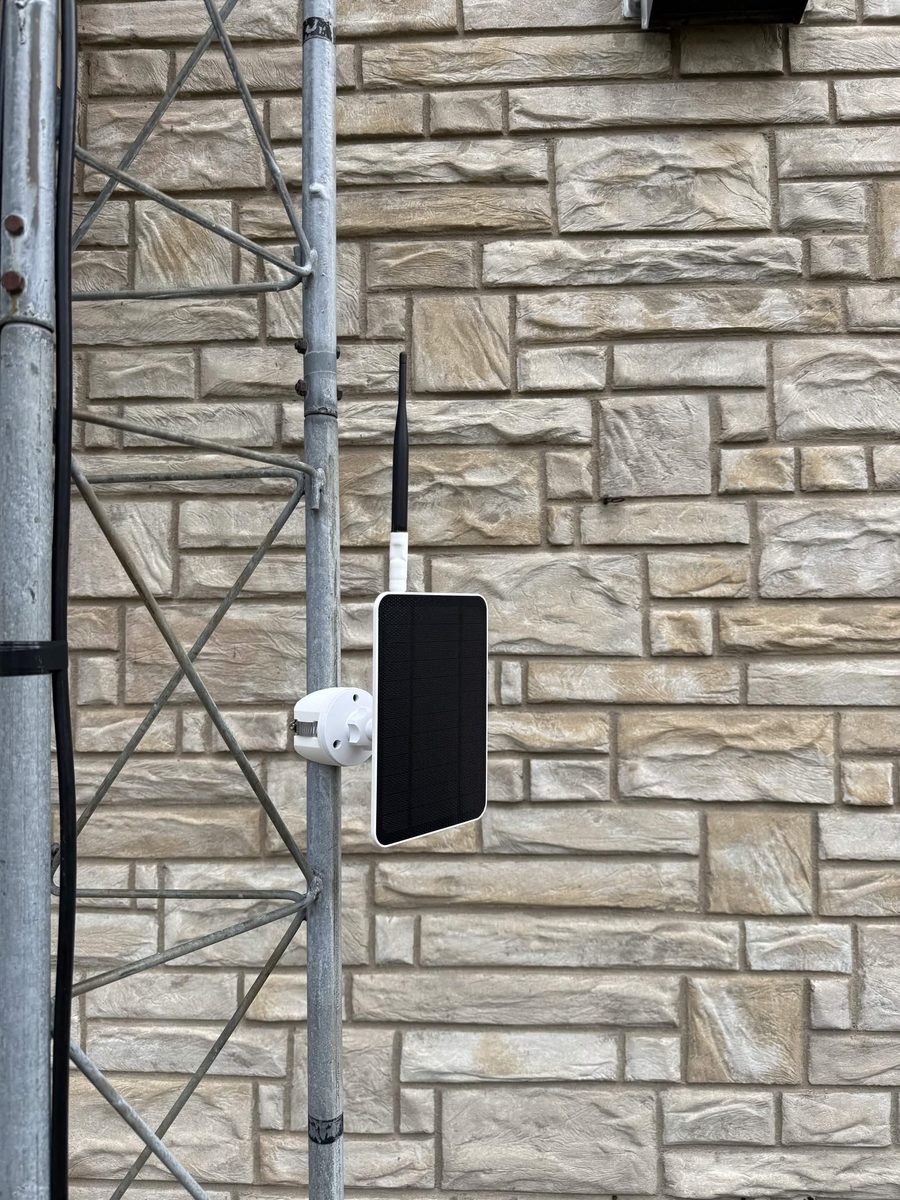
Rooftop Solar

Small, self-contained and completely off the grid — the one to reach for when there’s no power at the mount and the RF neighbourhood is quiet.

  • NodeRAK4631 Mini — no front-end filter
  • AntennaAlfa 2 dBi
  • Power5 W solar, single 18650 with BMS
  • EnclosureABS
  • Best forRooftops and short towers, clear of other transmitters
Build 2

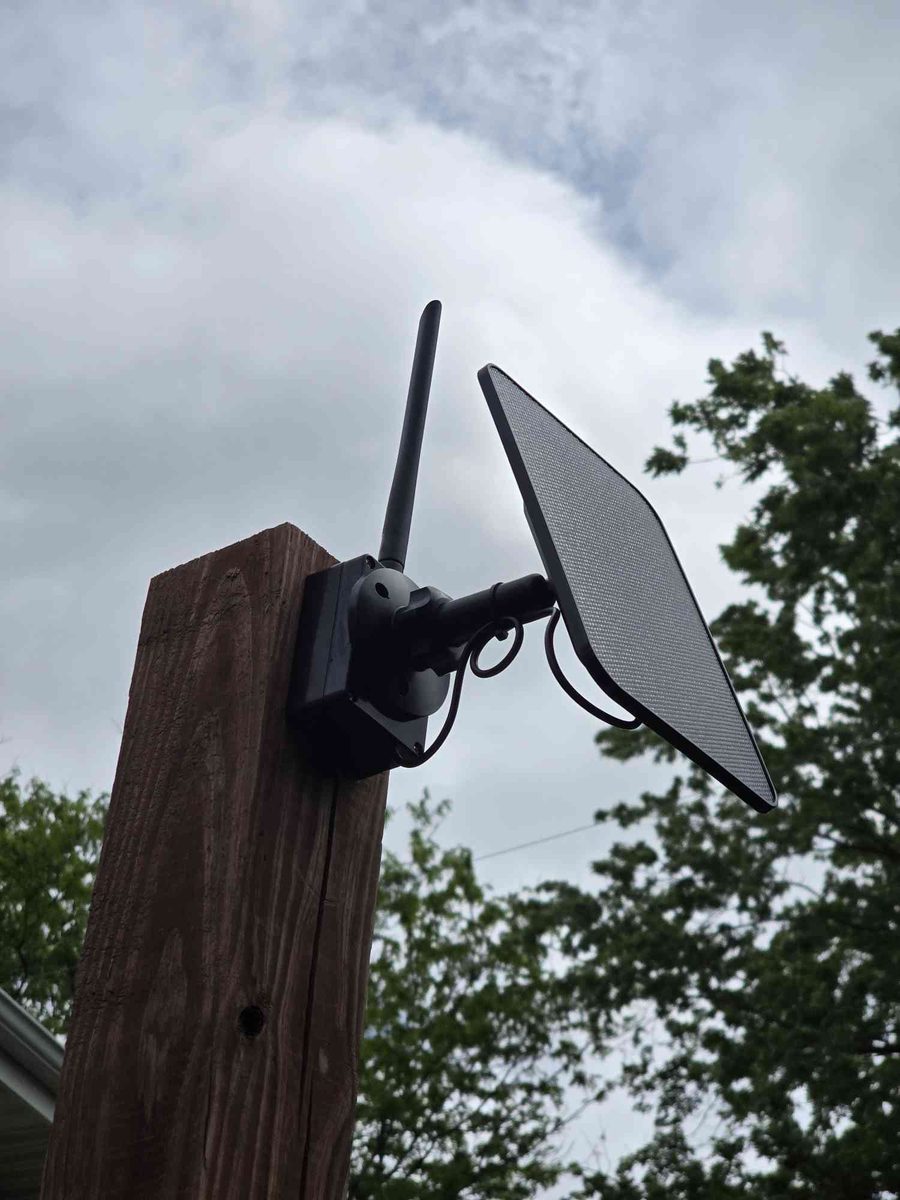
Post Mount

The same compact node, but with the panel on its own arm — so the solar can be aimed at the sun no matter which way the mount happens to face.

  • NodeRAK4631 Mini — no front-end filter
  • AntennaAlfa 2 dBi
  • Power5 W solar on an adjustable arm, 2000 mAh with BMS
  • EnclosureABS
  • Best forPosts, rooftops and short towers, clear of other transmitters
Build 3

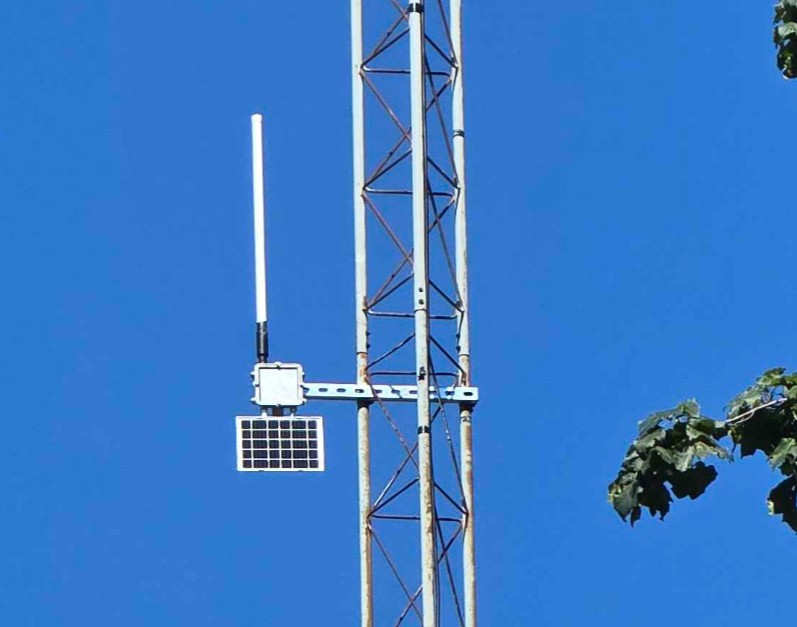
Tower Hardened

The one for real towers — shielded, filtered, and built around the two things that kill gear up high: the transmitters next door and the ice overhead.

  • NodeRAK 1 Watt — built-in bandpass filter
  • AntennaRAK 5.8 dBi, on N-type — swap in any antenna
  • Power10 W solar, slung under the standoff and out of the ice line; 8000 mAh with BMS
  • EnclosureCast aluminum with RF gasket
  • UpdatesExternal BLE antenna — pair and reflash at height
  • Best forTall towers and crowded RF sites

Why two of these say “clear of other transmitters.” The ABS builds have no front-end filter, so they’re happiest somewhere nothing strong is transmitting nearby — put an unfiltered receiver beside commercial gear on a busy tower and it simply gets swamped (here’s why). That’s the job Tower Hardened exists to do: a bandpass filter in the radio, a gasketed metal housing around it, and the solar panel deliberately slung beneath the standoff so the tower can shed ice over the top of it.

// how we build

What a tower-grade node involves

The parts that separate a node that survives a winter from one that needs a second climb.

  • Solar and self-contained, every time. Each build carries its own panel and battery, so nothing depends on the site having power and there’s no cable run to the ground. That keeps the ask on a tower owner small — we’re not asking for an outlet, a conduit, or space in anyone’s rack — and it means the node keeps working when the building it’s bolted to doesn’t.
  • Sized for the worst month, not the average one. A panel and cell that coast through July can starve in a Wisconsin December, when the days are short and the panel spends a week under snow. The battery is sized to ride out that stretch, and the node runs a low-power sleep so it sips rather than gulps.
  • The antenna lives on the node. Keeping the radio and antenna together means there’s no long coax run — and at 915 MHz a long run of ordinary coax can eat more signal than the extra height ever bought you. What little cable there is gets the full treatment: drip loops and properly layered weatherproofing on every connector, the right way, because one wet connection quietly kills a site.
  • Filtering, because towers are hostile. Commercial paging and land-mobile transmitters sit right beside the 900 MHz band and will desense an unprotected receiver into uselessness. A node on a busy tower usually needs a bandpass filter — this is the single most common reason a high install underperforms a low one.
  • Falling ice, on anything tall. This is the one people forget. When a big tower thaws, sheets of ice let go from the structure, the antennas and the guys above — and after a couple of hundred feet a chunk of ice will smash an enclosure or shear a mount straight off. So we mount out of the fall line where the geometry allows, keep the node tucked close to a leg rather than out on a long standoff, and stay clear of what sits directly beneath platforms, dishes and guy attachment points. Where the fall line genuinely can’t be dodged, the node goes behind a shield.
  • Weatherproofing that assumes the worst. Sealed enclosures, UV-stable hardware, and mounts that will still be tight after a few hundred freeze-thaw cycles and a summer of wind. Everything up there is chosen on the assumption that nobody is coming back to check on it.
  • Remote management. Nodes go up configured for over-the-air updates, so firmware changes never require another climb. See OTAFIX and OTA updates.

Climbing is specialist work. Tower climbs are done only by qualified, equipped climbers with the tower owner’s explicit permission. If a site can’t be worked safely and legally, we won’t work it — no exceptions, however good the location looks on a map.

// two ways in

What we offer

Option 1

Full install, our hardware

RF Lab provides the node, antenna and enclosure, builds it to the standard above, and installs it. Best where a site would fill a real gap in mesh coverage.

Option 2

Climb only, your hardware

You supply the node and antenna; we handle getting it safely up the tower and mounted properly. Bring your own gear, borrow our height and hands.

Either way it starts with an application, so we can look at the site and judge what it would actually do for the mesh.

Got a tower?

Tell us about the site — location, height, and what you’re hoping to put up there.

Tower day

What it actually looks like — click any photo to enlarge.